





How AI is Transforming Traditional Industries
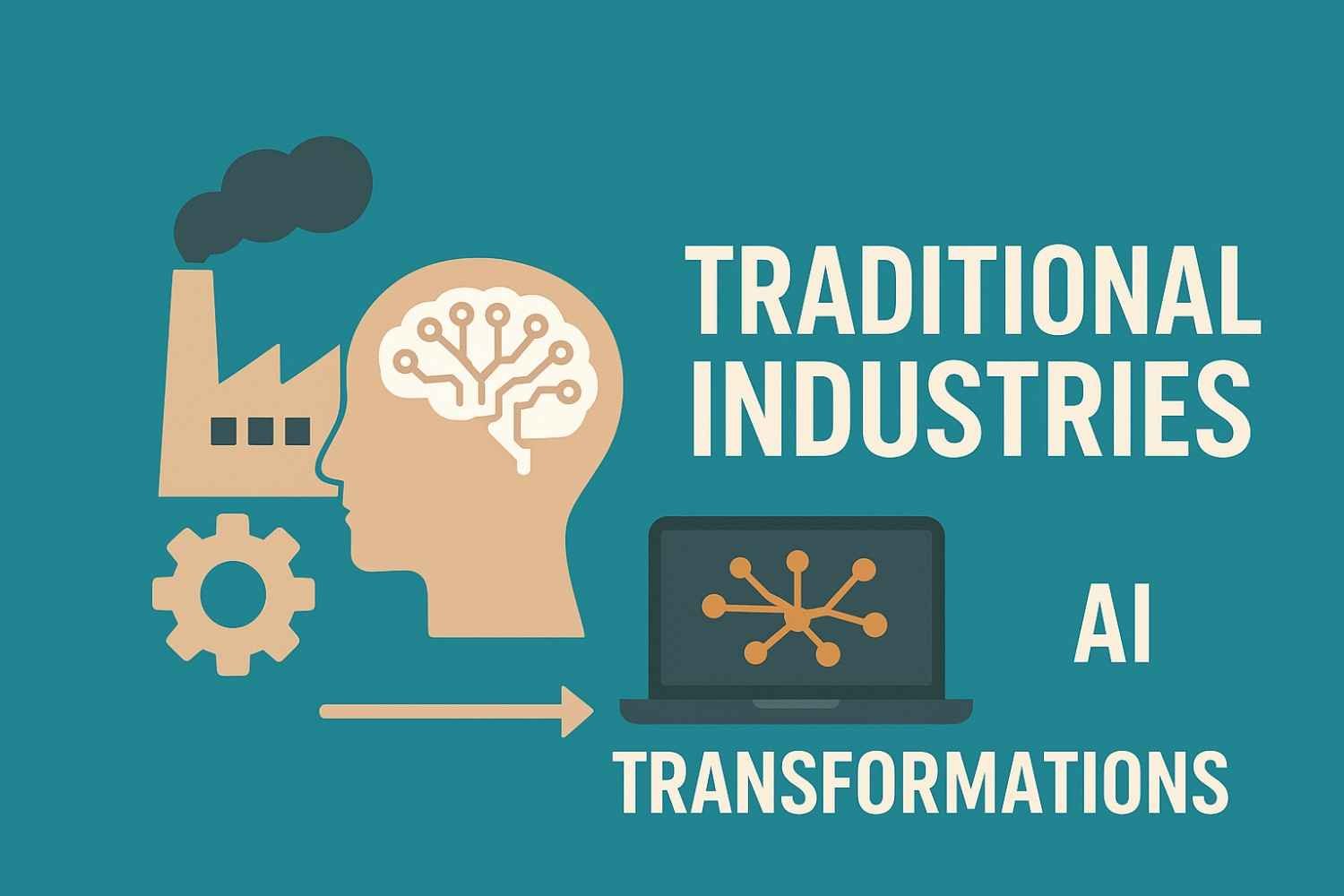
Artificial Intelligence (AI) is no longer a futuristic concept—it is actively reshaping industries across the globe. From manufacturing and healthcare to finance and retail, AI is enabling businesses to improve efficiency, reduce costs, and create new value propositions. Traditional industries, once heavily dependent on manual processes, are now leveraging AI to stay competitive in a rapidly evolving market.
This article explores how AI is transforming traditional industries and the opportunities it presents for businesses willing to embrace the change.
1. Manufacturing: Smarter and More Efficient Production
AI is revolutionizing manufacturing by enabling predictive maintenance, quality control, and process optimization.
-
Predictive Maintenance: AI-powered sensors analyze machine performance to predict failures before they occur, reducing downtime.
-
Quality Control: Computer vision systems automatically detect defects on production lines, improving product consistency.
-
Supply Chain Optimization: AI forecasts demand and manages inventory, reducing waste and improving delivery times.
Impact: Manufacturers can produce more efficiently, reduce costs, and respond faster to market demand.
2. Healthcare: Precision and Personalization
Healthcare has been one of the most promising fields for AI applications.
-
Diagnostics: AI algorithms analyze medical images and patient data to detect diseases like cancer or cardiovascular issues earlier and more accurately.
-
Personalized Treatment: AI evaluates genetic data and patient history to recommend customized treatment plans.
-
Operational Efficiency: Hospitals use AI to optimize scheduling, manage patient flow, and streamline administrative tasks.
Impact: Improved patient outcomes, reduced human error, and optimized healthcare delivery.
3. Finance: Smarter Decisions and Risk Management
AI is transforming finance by enhancing decision-making and fraud prevention.
-
Fraud Detection: Machine learning identifies unusual patterns in transactions, preventing financial fraud.
-
Algorithmic Trading: AI models analyze market trends and execute trades faster than humans.
-
Customer Insights: Banks use AI to offer personalized financial advice and products to customers.
Impact: Reduced operational risk, increased efficiency, and enhanced customer experiences.
4. Retail: Personalized Shopping Experiences
Retailers are leveraging AI to meet evolving consumer expectations.
-
Recommendation Engines: AI analyzes shopping behavior to suggest products, increasing sales and customer engagement.
-
Inventory Management: AI predicts demand trends and optimizes stock levels.
-
Customer Service: Chatbots and virtual assistants handle inquiries 24/7, improving satisfaction.
Impact: Higher sales, improved customer loyalty, and efficient inventory management.
5. Transportation and Logistics: Optimized Mobility
AI is streamlining transportation and logistics operations worldwide.
-
Route Optimization: AI algorithms determine the fastest and most fuel-efficient routes for deliveries.
-
Predictive Maintenance: Vehicles and fleets are monitored for potential issues before breakdowns occur.
-
Autonomous Vehicles: AI is powering self-driving cars and trucks, promising safer and more efficient transport.
Impact: Reduced costs, faster delivery, and safer operations.
6. Agriculture: Smarter Farming Techniques
Agriculture, a traditionally labor-intensive industry, is benefiting from AI-driven innovations.
-
Precision Farming: AI analyzes soil, weather, and crop data to optimize planting and harvesting schedules.
-
Pest and Disease Detection: AI-powered drones and imaging detect crop issues early.
-
Yield Prediction: Machine learning predicts crop yield for better planning and market decisions.
Impact: Increased productivity, lower resource waste, and improved sustainability.
Challenges of AI Adoption in Traditional Industries
While AI offers significant benefits, adoption comes with challenges:
-
High Initial Investment: Implementing AI solutions can be costly.
-
Data Quality and Availability: AI relies on accurate and sufficient data to be effective.
-
Workforce Adaptation: Employees may need retraining to work alongside AI systems.
-
Ethical and Regulatory Concerns: Privacy, bias, and transparency are critical considerations.
AI is no longer optional—it is becoming a strategic imperative for traditional industries. Businesses that embrace AI can optimize operations, enhance decision-making, and deliver personalized experiences to customers.
The industries that adapt early will not only remain competitive but also unlock new opportunities for innovation and growth. As technology evolves, AI will continue to reshape the industrial landscape, making efficiency, precision, and personalization the new standard.