




Pre-Seed, Seed, and Series A Explained: A Beginner’s Guide
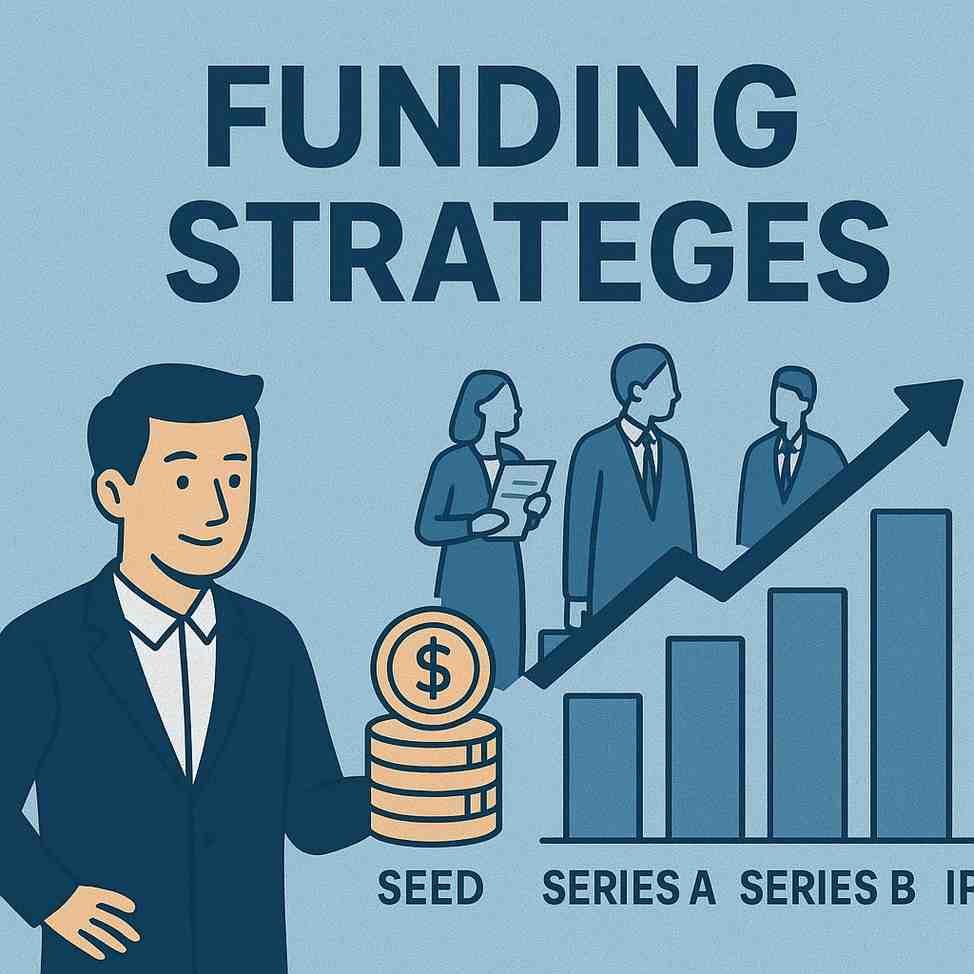
Raising capital is a critical milestone for any startup, but understanding the stages of funding can be confusing for first-time founders. Terms like Pre-Seed, Seed, and Series A are often thrown around in investor discussions, yet their meaning, purpose, and expectations differ significantly. This guide simplifies these funding stages and helps entrepreneurs navigate the startup financing journey.
1. Pre-Seed Funding: Turning Ideas into Action
What it is:
Pre-seed funding is the earliest stage of startup investment, often raised when a company is just an idea or in its conceptual phase. The primary goal is to validate the idea and build a minimum viable product (MVP).
Sources of Pre-Seed Funding:
-
Founders’ personal savings (bootstrapping)
-
Friends and family
-
Angel investors or micro-VCs
-
Incubators and startup accelerators
Typical Amount Raised:
-
Usually between $10,000 to $250,000, depending on industry and location.
Objectives:
-
Develop a prototype or MVP.
-
Conduct market research and validate product-market fit.
-
Build a founding team and set initial business operations.
Key Considerations:
-
At this stage, investors take high risks; equity offered is often higher due to uncertainty.
-
Focus is on learning and experimentation rather than scaling.
2. Seed Funding: From MVP to Early Traction
What it is:
Seed funding is the first official round of investment aimed at growing a validated product or service. By this stage, startups typically have an MVP and some early traction or paying customers.
Sources of Seed Funding:
-
Angel investors
-
Seed-focused venture capital funds
-
Crowdfunding platforms
-
Startup accelerators
Typical Amount Raised:
-
Generally ranges from $250,000 to $2 million, though it can vary widely.
Objectives:
-
Scale the product and refine features based on user feedback.
-
Build a small sales or marketing team to attract early customers.
-
Establish operations and start generating predictable revenue.
Key Considerations:
-
Investors at this stage expect evidence of market demand and a clear path to growth.
-
Equity offered usually ranges from 10% to 25%, reflecting reduced risk compared to pre-seed.
3. Series A Funding: Scaling with Strategy
What it is:
Series A funding is aimed at startups that have proven their concept, achieved product-market fit, and demonstrated early traction. The goal is to scale the business strategically, expand the team, and increase revenue.
Sources of Series A Funding:
-
Venture capital firms specializing in early-stage investments
-
Strategic investors or corporate venture arms
Typical Amount Raised:
-
Ranges from $2 million to $15 million, depending on growth potential and industry.
Objectives:
-
Expand market reach and grow user/customer base.
-
Enhance product offerings and technology infrastructure.
-
Strengthen management teams and operational capabilities.
Key Considerations:
-
Investors expect a well-defined business model, strong KPIs, and scalable operations.
-
Equity dilution is lower than earlier rounds, typically 15%–30%, as the startup is now less risky.
Key Differences Between Pre-Seed, Seed, and Series A
| Stage | Goal | Typical Funding Amount | Equity Given | Key Focus | Risk Level |
|---|---|---|---|---|---|
| Pre-Seed | Validate idea, build MVP | $10k – $250k | 15–30% | Concept development, team formation | Very High |
| Seed | Early traction, product fit | $250k – $2M | 10–25% | Scaling product, market validation | High |
| Series A | Scale business, revenue growth | $2M – $15M | 15–30% | Expanding operations, optimizing model | Moderate |
Understanding the nuances of pre-seed, seed, and Series A funding is critical for first-time founders. Each stage has distinct objectives, funding sources, and investor expectations:
-
Pre-seed: Focus on building an MVP and testing the idea.
-
Seed: Achieve early traction, refine the product, and start generating revenue.
-
Series A: Scale operations strategically, expand the team, and grow revenue.
By aligning your startup’s needs with the right funding stage, founders can raise capital efficiently, minimize unnecessary equity dilution, and set the foundation for long-term success.