




Infarm: Revolutionizing Urban Farming with Vertical Agriculture
As cities grow and the global population continues to rise, traditional farming alone cannot keep up with the increasing demand for fresh, healthy, and sustainable food. This challenge has given rise to urban farming innovations, and at the heart of this movement is Infarm, a company that is reshaping how food is grown and consumed in modern cities.
What is Infarm?
Infarm is a Berlin-based urban farming company founded in 2013 with a mission to make fresh food more accessible while reducing the environmental impact of agriculture. Instead of growing crops on large plots of farmland, Infarm brings modular vertical farms directly into cities, supermarkets, and restaurants.
These smart farming units allow consumers to access herbs, leafy greens, and vegetables that are grown locally—sometimes just a few meters away from where they are purchased or eaten.
How Infarm Works
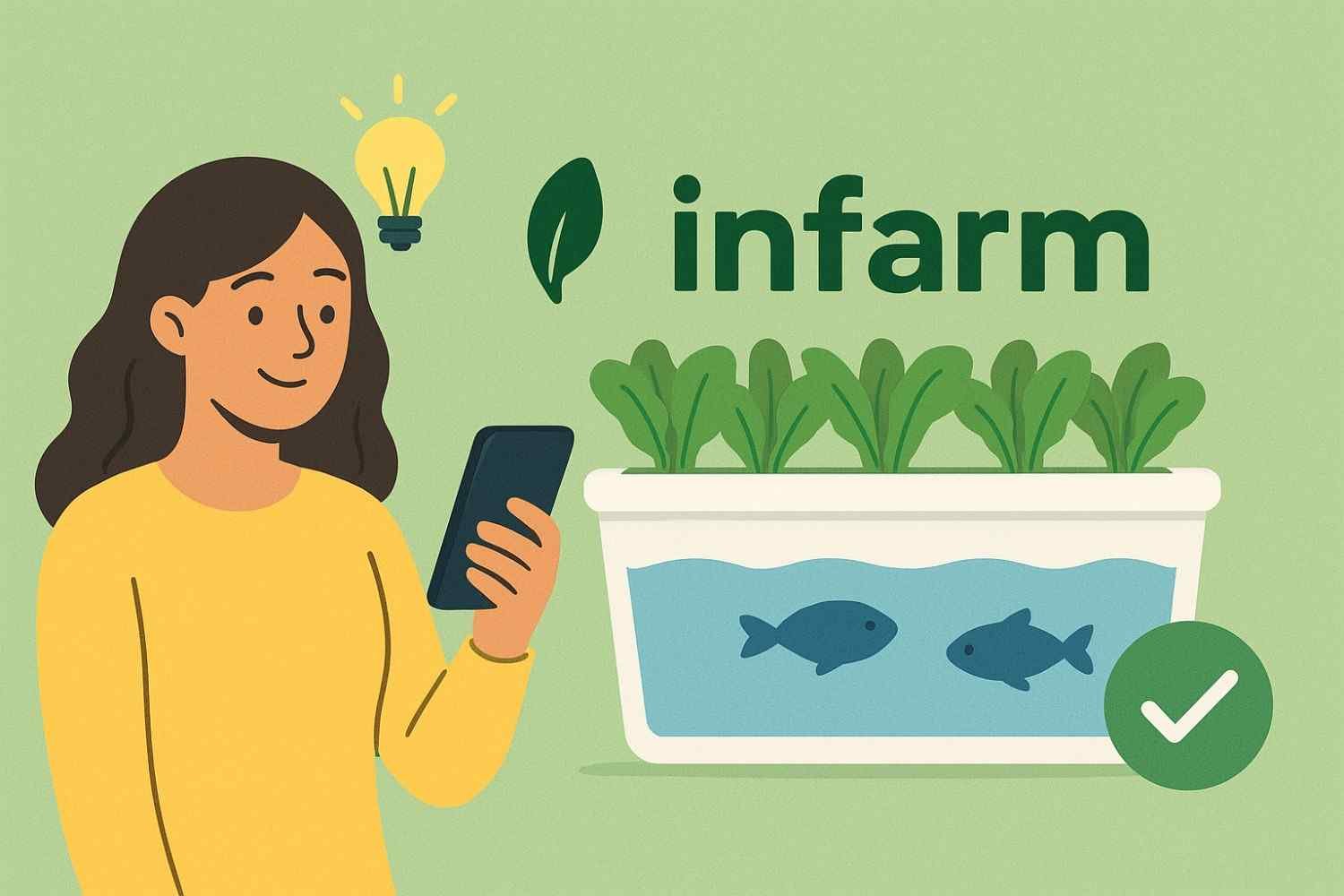
Infarm’s farming system is based on hydroponics and vertical farming:
-
Hydroponics: Crops are grown without soil, using nutrient-rich water solutions.
-
Vertical Structures: Plants are stacked in layers to maximize space efficiency, making it possible to grow more food in less area.
-
Smart Technology: Each farming unit is connected to a cloud platform that monitors temperature, light, nutrients, and humidity in real time. This ensures crops grow under ideal conditions all year round.
-
Modularity: Farms can be installed in supermarkets, distribution centers, or restaurants, reducing transportation needs and food waste.
Benefits of Infarm’s Approach
Infarm’s model brings multiple advantages to both consumers and the environment:
-
Freshness and Flavor – Since produce is harvested directly at the point of sale, consumers enjoy fresher and more flavorful herbs and greens.
-
Sustainability – Infarm’s hydroponic systems use up to 95% less water and 90% less transport compared to traditional farming.
-
Urban Accessibility – By placing farms in city centers, Infarm reduces the distance between farm and table, making local food accessible to millions.
-
Year-Round Harvests – Controlled indoor environments allow continuous production regardless of season or climate.
-
Reduced Food Waste – Growing food near the point of consumption lowers spoilage and transport losses.
Infarm’s Global Presence
From its origins in Berlin, Infarm has expanded into multiple countries, installing thousands of vertical farming units in supermarkets, restaurants, and distribution hubs. Partnerships with major retailers have allowed the company to bring fresh produce directly to urban consumers in Europe, North America, and Asia.
Challenges and Opportunities
Like all pioneering ventures, Infarm faces challenges. Setting up advanced vertical farms requires significant energy use, and scaling operations profitably can be complex. However, advances in renewable energy, automation, and data-driven farming continue to make urban agriculture more viable.
The demand for sustainable, pesticide-free, and locally grown food is rising, providing Infarm with a growing global opportunity to expand its footprint.
The Future of Infarm
Infarm’s vision extends beyond just supplying cities with fresh herbs and greens. The company aims to play a central role in reshaping food systems by building large-scale vertical farming hubs that can support entire regions. With continued innovation and collaboration, Infarm has the potential to reduce agriculture’s environmental impact while ensuring food security for urban populations.
Infarm is proving that farming doesn’t have to be tied to open fields or rural landscapes. By bringing vertical farms into cities, it bridges the gap between consumers and their food while promoting sustainability, freshness, and resilience in the food supply chain.
As urban populations continue to grow, companies like Infarm demonstrate that the future of farming may not be out in the countryside—but right in the heart of our cities.