





Equity vs. Debt Financing: Which is Right for Your Startup?
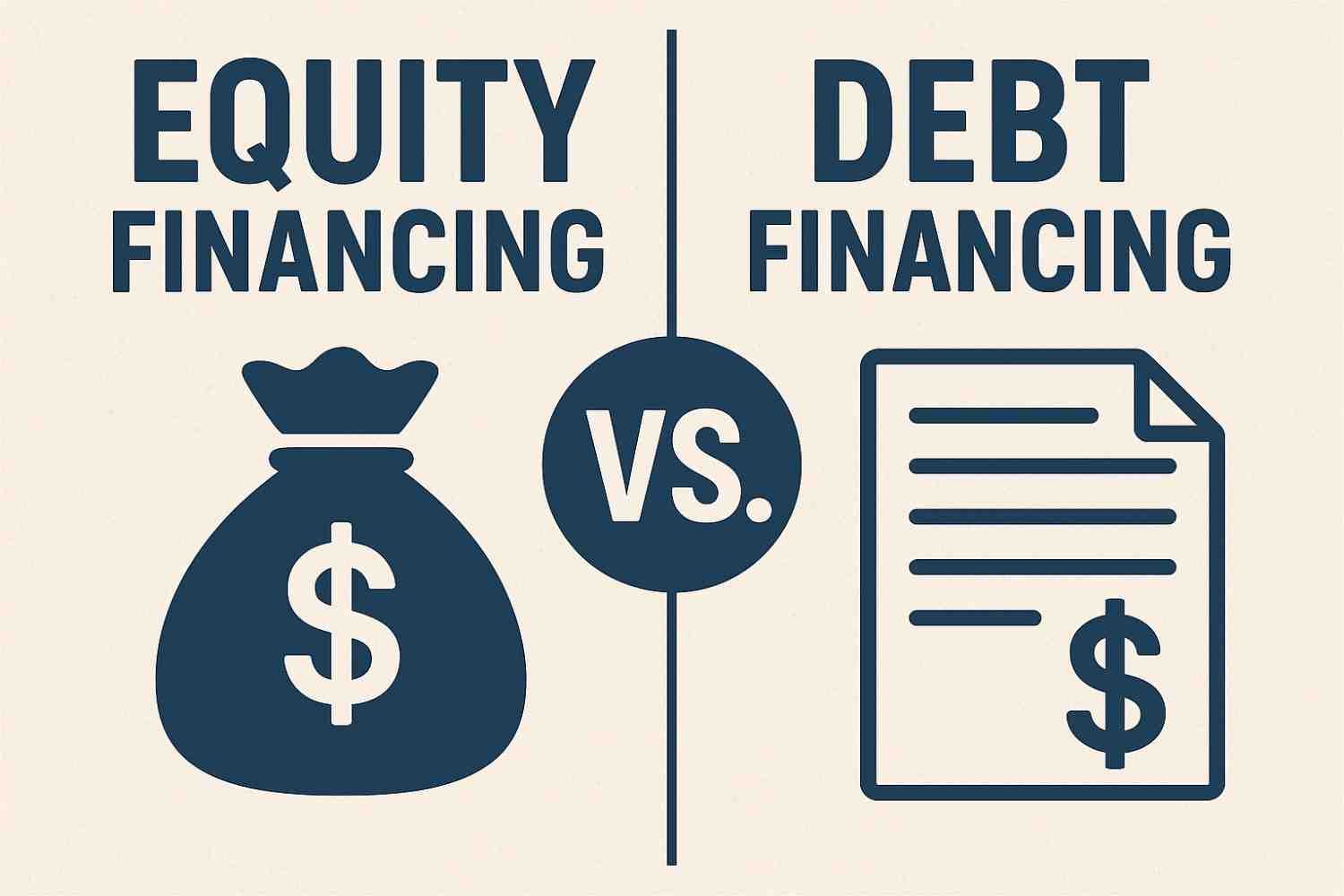
Securing funding is one of the most critical decisions for any startup. Choosing the right type of financing can determine not only how fast your business grows but also how much control you retain and how financially sustainable your operations are. The two primary funding options are equity financing and debt financing. Understanding their differences, advantages, and drawbacks is key to making the best choice for your startup.
What is Equity Financing?
Equity financing involves raising capital by selling ownership stakes in your company. Investors—such as angel investors, venture capitalists, or equity crowdfunding participants—receive shares in exchange for funding.
Pros of Equity Financing:
-
No repayment pressure: Unlike loans, you don’t have to make monthly repayments.
-
Access to expertise: Investors often provide mentorship, industry connections, and strategic guidance.
-
Risk sharing: Investors share the risk of business failure since repayment is tied to company performance.
Cons of Equity Financing:
-
Ownership dilution: Founders give up a portion of control and profits.
-
Decision-making influence: Investors may demand board seats or veto power on key decisions.
-
Time-consuming process: Raising equity can involve long negotiations and due diligence.
Best for:
Startups with high growth potential, scalable business models, and the need for strategic guidance.
What is Debt Financing?
Debt financing involves borrowing money that must be repaid over time, usually with interest. Common sources include banks, financial institutions, online lenders, and government-backed loan programs.
Pros of Debt Financing:
-
Full ownership retained: No equity is given up, and founders maintain complete control.
-
Predictable repayment schedule: You know exactly how much to repay and when.
-
Potential tax benefits: Interest payments are often tax-deductible.
Cons of Debt Financing:
-
Repayment obligation: Loans must be repaid regardless of business performance.
-
Financial risk: Failure to meet obligations can hurt credit rating or lead to insolvency.
-
Collateral requirements: Many lenders require assets or personal guarantees.
Best for:
Startups with predictable revenue streams, lower risk tolerance, and a desire to retain ownership.
Key Factors to Consider When Choosing
-
Stage of the Startup
-
Early-stage startups with uncertain cash flow may struggle with debt repayments and are better suited for equity financing.
-
Growth-stage startups with stable revenue can leverage debt to fuel expansion without giving up equity.
-
-
Risk Appetite
-
Founders willing to share ownership and strategic input may prefer equity.
-
Risk-averse founders who want to retain control may favor debt.
-
-
Cost of Capital
-
Equity may appear “free” upfront but can be expensive in terms of ownership and profit sharing.
-
Debt has clear financial costs (interest) but allows you to keep full equity.
-
-
Growth Objectives
-
Rapid growth often requires more capital than a single founder can provide—equity can bring significant funds and expertise.
-
Moderate, controlled growth can be achieved efficiently with debt financing.
-
-
Control and Decision-Making
-
Equity investors may influence business strategy, hiring, or exit plans.
-
Debt lenders typically do not interfere with operations, as long as repayments are made.
-
Hybrid Approach: The Best of Both Worlds
Many startups combine equity and debt financing to balance growth and control. For example:
-
Use equity to cover high-risk early-stage operations.
-
Use debt for predictable costs like equipment purchase or marketing campaigns.
This approach allows founders to leverage external expertise while retaining some control and minimizing repayment pressure.
Choosing between equity and debt financing is not just about money—it’s about strategy, growth potential, and long-term vision.
-
Equity financing is ideal for high-growth startups willing to share ownership and leverage investor expertise.
-
Debt financing works well for revenue-generating startups that want to retain full control while managing costs.
-
Hybrid models can provide flexibility and balance risk and growth.
The right choice depends on your startup’s stage, risk tolerance, growth ambitions, and need for strategic support. Thoughtful consideration ensures your funding decision supports sustainable growth and long-term success.